Whether you're staring down a padlock with a combination you can't quite remember, wrestling with a locker that won't budge, or trying to figure out why your key suddenly won't turn, "how to open a lock" is one of those questions that feels simple until you're actually stuck. The right method depends entirely on what kind of lock you're dealing with — a key-operated lock, a dial combination padlock, a 4-digit locker lock, or something you're trying to open without a key at all.
This guide walks through each scenario step by step, including the classic right-left-right combination method, what to do if you've forgotten your combination, and when it's time to stop troubleshooting and call a professional locksmith instead.
How to Open a Lock With a Key
Opening a key lock correctly is mostly about technique: insert the key fully into the cylinder, apply steady (not forceful) pressure while turning, and let the pins settle before continuing. If the key won't turn, don't force it — jiggle gently, check for a bent key, or try lifting/pushing the door slightly to relieve pressure on the latch.
A few common reasons a key lock resists opening:
- A worn or slightly bent key that no longer lines up the pins correctly
- Dirt, dust, or old lubricant buildup inside the cylinder
- A misaligned door or strike plate, which puts tension on the latch and locks it in place
- A key that's simply the wrong cut, even if it looks close
If the key turns partway and then stops, or if it snaps off inside the cylinder, stop trying to force it — that's a situation covered in more detail below.
How to Open a 3-Digit Combination Lock (Right-Left-Right Method)
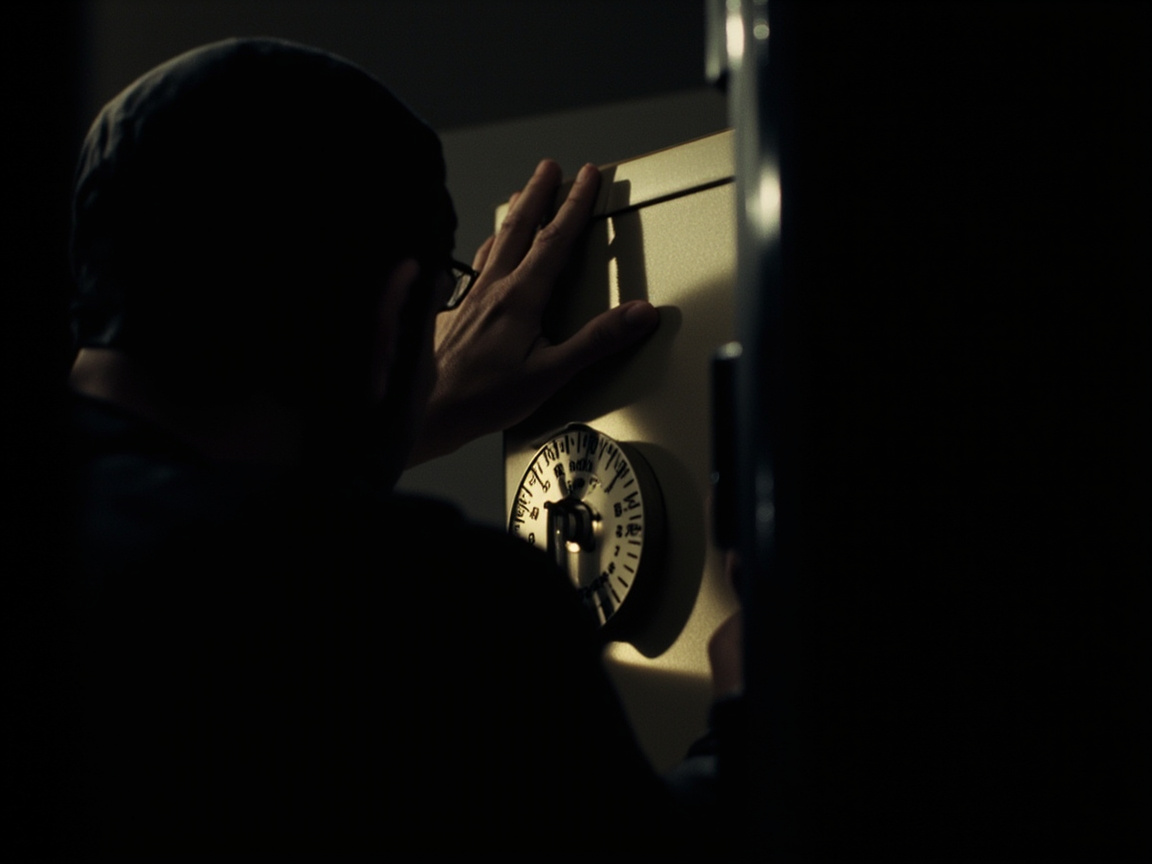
To open a standard 3-digit dial combination lock, turn the dial clockwise three full rotations to clear it, then stop directly on your first number. Turn counterclockwise, passing the first number once, and stop on the second number. Finally, turn clockwise straight to the third number and pull the shackle.
Here's the process broken down:
- Clear the dial. Turn it clockwise (to the right) at least three full turns to reset any leftover input.
- Set the first number. Continue turning clockwise and stop precisely when the dial's mark lines up with your first number.
- Set the second number. Reverse direction and turn counterclockwise (to the left), passing your first number one full time, then stop on the second number.
- Set the third number. Turn clockwise (to the right) again, this time going directly to the third number — no extra pass-throughs.
- Pull and release. Pull up on the shackle while the dial sits on the third number. If it doesn't release, the lock may need a slight jiggle or a slower final turn.
Do Locks Go Left, Right, Left?
Most standard dial combination locks, including common Master Lock padlocks, actually go right-left-right rather than left-right-left: right to the first number, left to the second, right to the third. Some off-brand or older locks reverse this pattern, so if right-left-right doesn't work, left-right-left is worth trying next.
3-Dial Wheel Locks Work Differently
Not every "3-digit combination lock" uses a rotating dial. Many luggage locks, cable locks, and bike locks use three (or four) independent number wheels instead. To open one of these, you simply spin each individual wheel until the correct digit lines up on the reading line — there's no clockwise/counterclockwise sequence involved at all. If your lock has separate number wheels stacked side by side rather than one big dial, this is the type you have.
What Are the Steps to Open a Lock? (Quick Reference)
The exact steps depend on the lock type, but the general process is the same across most locks: identify what kind of lock it is, gather the code or key, clear any previous input, enter the sequence slowly and deliberately, then apply gentle pressure to release the mechanism. Rushing the input is the most common reason people get stuck.
As a quick reference:
- Key locks: Insert fully, turn steadily, don't force resistance.
- Dial combination locks: Clear the dial, then go right-left-right (or left-right-left) to your three numbers.
- Wheel-style combination locks: Line up each wheel independently to the correct digit.
- Digital/keypad locks: Enter the full code without long pauses between digits, since many models time out and reset after a few seconds.
- Locks that won't budge: Stop forcing it, check for obstructions, and reset your inputs before trying again.
How to Open a 4-Digit Combination Lock (Locker Lock)
To open a 4-digit locker lock, most models use either a rotating dial similar to a 3-digit padlock (just with a fourth number added to the sequence) or a push-button/digital keypad where you simply enter all four digits in order and press enter or turn a handle. Check whether your lock has a dial or buttons before trying either method.
If it's a 4-digit dial lock: follow the same clear-and-set process as a 3-digit lock, just with one extra number in the sequence — clockwise to clear, then alternate directions for each of the four digits per the lock's printed instructions (these vary slightly by manufacturer, so check the back of the lock or its packaging if you have it).
If it's a push-button or digital keypad lock: enter the four digits at a normal, steady pace, then turn the handle or press the release button. If nothing happens, double-check you're not accidentally skipping a repeated digit (like 2-2-4-6), which is a common input mistake.
How to Open a Locker With a Built-In Combination Lock
School and gym lockers with a built-in dial (permanently mounted rather than a separate padlock) typically use a simpler right-left-right pattern than standalone padlocks — often two full turns clockwise before the first number, one pass to the left for the second, and a direct turn right to the third. Because built-in locker locks vary by manufacturer and are often reset between users, the number of preliminary turns can differ, so it's worth trying the standard sequence first and adjusting the initial turn count if it doesn't release.

How to Open a Combination Lock You Forgot
If you've forgotten your combination, start by checking whether the manufacturer offers a legitimate combination-retrieval option — Master Lock, for example, can recover the combination for some older padlocks from the serial number stamped on the back, though it requires a signed proof-of-ownership request rather than an instant online lookup. It's slower than you might like, but it's safer than any manual workaround.
If there's no serial number lookup available or the lock isn't registered:
- Check any paperwork or packaging from when you bought the lock — combinations are sometimes printed on a card included in the box.
- Try common default combinations if the lock is new or was recently purchased used, since some ship with a factory-set code.
- Contact the manufacturer directly with proof of ownership; many keep records tied to serial numbers.
- Call a locksmith if the lock is securing something valuable and you need it opened without damaging it.
Manual "shimming" or shake methods you may see referenced online are inconsistent at best on newer combination locks, since manufacturers have redesigned mechanisms specifically to resist them. They're not a reliable fix, and attempting them repeatedly can damage the lock further.
How to Open a Lock Without a Key
Opening a lock without a key generally falls into two categories: legitimate bypass techniques for a lock you own but can't access normally, and lock-picking, which requires skill, the right tools, and — most importantly — that you actually own or have permission to access what's being locked.
Basic Lock-Picking Concepts
Lock picking works by manipulating the pins inside a cylinder lock to mimic what the correct key would do. At a high level, it involves inserting a tension wrench into the bottom of the keyway to apply light rotational pressure, then using a pick to push each pin up until it sets at the "shear line" — the point where the lock's inner and outer cylinders can rotate freely. It takes practice to feel the difference between a pin that's set and one that's still binding, and most locks (especially newer or higher-security models) are specifically designed to resist casual picking attempts.
This is genuinely useful general knowledge, but it's not a fast or reliable solution if you're locked out right now and need in immediately.
When to Skip DIY and Call a Professional Locksmith
If you're locked out of your home, car, or business, if the lock is high-security or resistant to basic bypass methods, or if there's any risk of damaging the door or lock trying to force it open, it's faster and safer to call a professional rather than experiment. Our guide on when to call a locksmith breaks down exactly which situations warrant a professional versus a DIY attempt.
For true lockout emergencies, it also helps to know what's actually involved before help arrives — see our overview of what to expect during an emergency locksmith lockout situation for a sense of the process, response expectations, and what information to have ready when you call.
Troubleshooting: When the Lock Still Won't Open
If you've followed the right steps and the lock still isn't cooperating, a few things are worth checking before you assume the worst:
- Double-check your sequence. A single missed digit or wrong direction is the most common issue with combination locks.
- Inspect for debris. Dirt, rust, or old lubricant can prevent pins or dials from moving freely, especially on outdoor padlocks exposed to Atlanta's humidity.
- Look for damage. A bent shackle, warped keypad, or worn keyway can prevent even a correct code or key from working.
- Check if the key is stuck or broken off. If a key has snapped inside the cylinder, don't try to dig it out with random tools — that can push debris deeper and complicate the fix. Our step-by-step guide on how to remove a broken key from a lock walks through the safer way to handle it.
Final Thoughts
Most locks open with patience and the right technique — slow, deliberate combination entry, steady key pressure, or a legitimate manufacturer lookup if you've forgotten your code. But not every lock is meant to be opened without help, and forcing a stuck mechanism often turns a simple fix into an expensive one.
If you're stuck on a lock in Atlanta, Brookhaven, Chamblee, Tucker, Norcross, Dunwoody, Smyrna, Decatur, Stone Mountain, Stockbridge, or Jonesboro, Crown Locksmith handles residential, automotive, and commercial lock issues when the DIY approach doesn't get you back in.