Locksmith vs. Handyman for Lock Problems: Which One Should You Call?
A lock that sticks every time it rains. A key that snaps off in the cylinder. A deadbolt that won't throw no matter how you jiggle it. When something goes wrong with a lock, most people reach for whoever's available — the handyman they already trust with odd jobs, or a locksmith. But that decision matters more than it seems. Call the wrong pro and you might end up paying twice or leaving your home less secure than before.
Here's how to tell the difference between locksmith vs handyman for lock problems, and how to match the right pro to the actual job.
Locksmith vs Handyman: What's the Real Difference?
A handyman is a generalist. They're trained to handle a wide range of small home repairs — hanging drywall, fixing leaky faucets, tightening loose hinges, and adjusting doors that stick or sag. A locksmith is a specialist. Their entire trade is built around lock mechanisms, key systems, and security hardware — pins, springs, keyways, cylinders, and the tools designed specifically to work with them.
The clearest way to split the difference: if the problem is about the door — frame alignment, hinges, a warped jamb, a loose knob — a handyman is usually the right call. If the problem is about the lock itself — the mechanism, the keys, the security — that's locksmith territory. Plenty of jobs sit right at the overlap, which is exactly where people make the wrong call.
Can a Locksmith Install and Repair Locks?
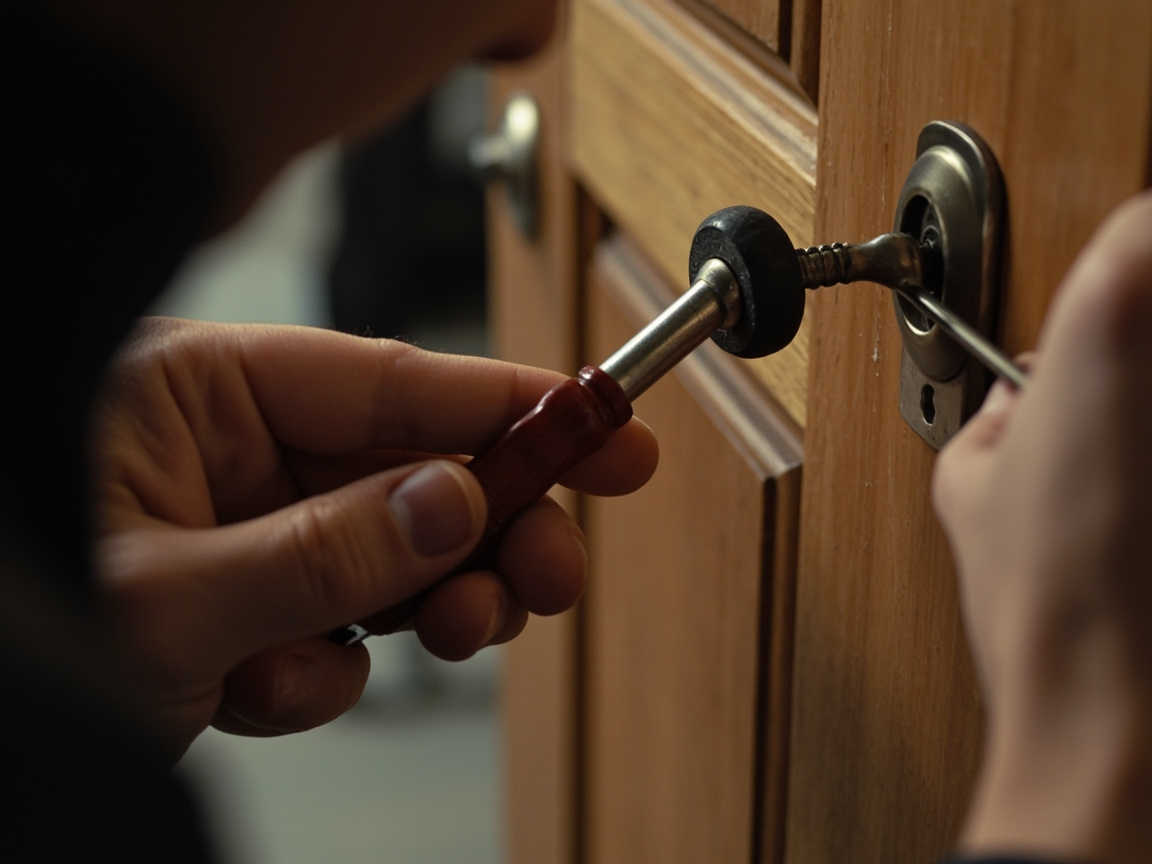
Yes. Installing, repairing, and rekeying locks is the core of what a locksmith does. They handle everything from fitting a new deadbolt to repairing a jammed cylinder, rekeying after a move, and setting up electronic or smart locks — work that requires specialized tools and a real understanding of how pins, springs, and keyways interact.
In practice, that covers:
- New lock installation on exterior and interior doors
- Rekeying existing locks so old keys stop working
- Repairing jammed, stuck, or misaligned cylinders
- Extracting broken keys from a lock
- Replacing worn or damaged hardware with matching or upgraded locks
- Setting up and programming electronic, keypad, or smart locks
- Servicing commercial-grade and high-security lock systems
A locksmith's advantage isn't just the tools — it's diagnosing why a lock is failing before touching it, so the fix actually holds instead of masking a deeper problem.
Can a Handyman Fix a Lock?
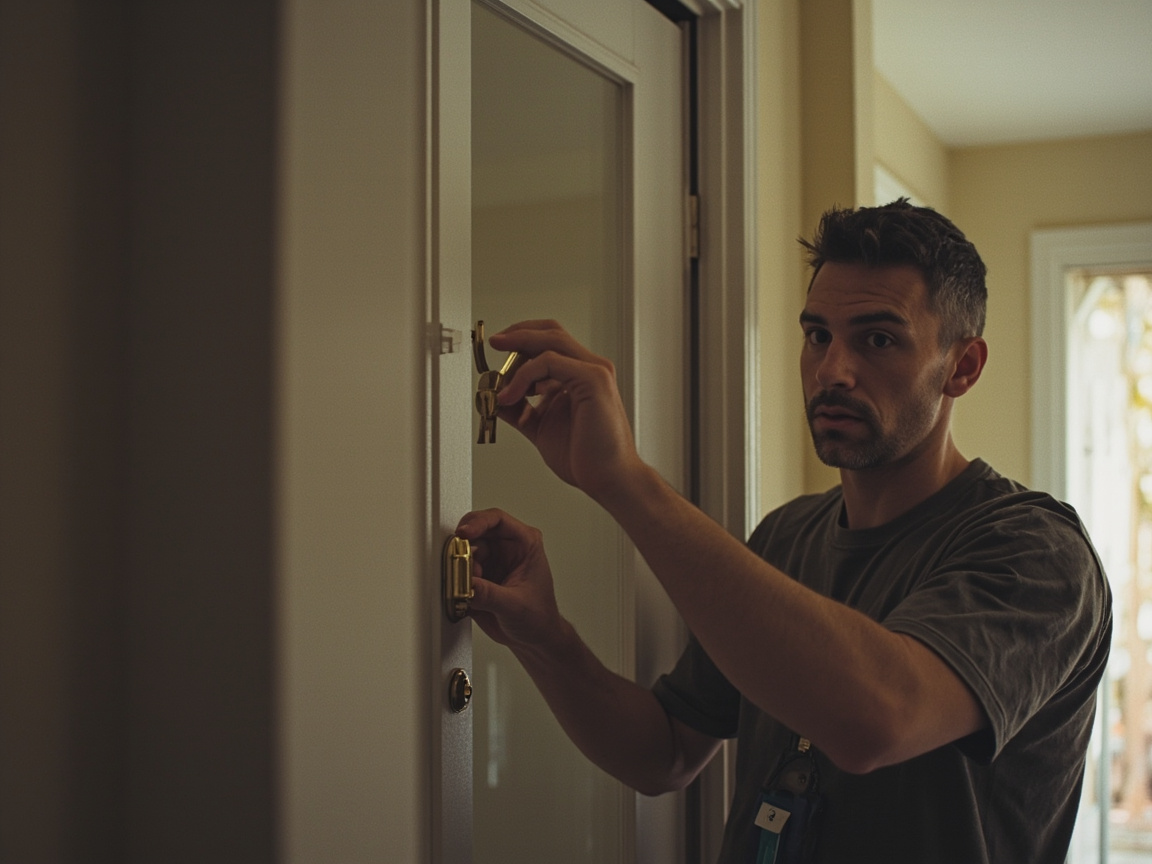
A handyman can handle lock-adjacent repairs that don't involve the internal mechanism or the security of the lock itself. Think: tightening a loose strike plate, adjusting hinges so a door closes flush, planing a swollen door that's sticking in its frame, or swapping a basic non-rekeyed knob set.
Where handymen generally reach their limit:
- Rekeying a lock or working with pin-and-tumbler internals
- Extracting a broken key without damaging the cylinder
- Diagnosing whether a lock failure is mechanical or security-related
- Installing high-security, commercial, or electronic access hardware
- Anything involving lock picking, bypass, or non-destructive entry
If a handyman isn't sure whether an issue is a door problem or a lock problem, that uncertainty is itself a sign to bring in a locksmith instead of guessing.
How Much Do Locksmiths Charge to Fix a Lock?
Locksmith pricing is typically structured around a base service call fee plus labor and the cost of any parts or hardware involved, with the total depending on the type of lock, the complexity of the repair, and the time of day. Emergency, after-hours, or high-security jobs generally cost more than a routine daytime repair.
A few factors that commonly move the price up or down:
- Lock type and brand — standard residential hardware is usually simpler to service than high-security or commercial-grade systems
- Scope of the job — rekeying one door costs less than rekeying an entire property
- Timing — emergency or after-hours calls typically carry a premium over scheduled daytime visits
- Parts needed — a repair that only needs adjustment costs less than one requiring new hardware
- Travel distance — mobile service calls may factor in location
Because pricing varies by provider and situation, the most reliable way to know what a specific repair will cost is to ask for a quote before work begins, rather than relying on a general number.
Can a Locksmith Unlock Anything?
No single locksmith can open literally any lock. Some high-security, electronic, or heavily reinforced locks are specifically engineered to resist bypass, and in those cases a locksmith may need to drill or replace the hardware rather than open it non-destructively. That said, most residential, automotive, and standard commercial locks fall well within a trained locksmith's skill set.
The method used depends on the lock itself:
- Standard pin-and-tumbler locks can often be picked or bypassed without damage
- High-security cylinders may resist picking and require different techniques or destructive entry
- Safes with lost combinations sometimes require manipulation, drilling, or manufacturer support
- Vehicles with transponder or immobilizer systems need key programming tools, not just mechanical skill
- Electronic and smart locks may need a manufacturer reset rather than a physical bypass
A handyman generally has none of these tools or techniques available — lockouts and security bypasses are locksmith work, full stop.
Common Lock Problems: Which Pro Should You Call?
| Problem | Best Pro | Why |
|---|---|---|
| Broken key stuck in the lock | Locksmith | Requires extraction tools and cylinder expertise |
| Door won't latch because the frame shifted | Handyman | Carpentry/alignment issue, not a lock mechanism issue |
| Lost all copies of your keys | Locksmith | Needs rekeying so old keys can't be used |
| Loose hinges causing the door to sag | Handyman | Hardware adjustment, not lock-related |
| Old, rusted, or seized lock | Locksmith | Internal mechanism repair or replacement |
| Smart lock won't pair or malfunctions | Locksmith | Electronic lock programming and troubleshooting |
| Misaligned strike plate | Handyman | Simple adjustment to door hardware |
| Need locks rekeyed after a move | Locksmith | Security-critical, requires cylinder work |
| Locked out of your home or car | Locksmith | Non-destructive entry and key duplication |
If your situation doesn't map neatly onto this list, our guide on lock repair: when is it worth doing yourself and when to call a locksmith walks through more specific scenarios.
The Risks of Calling the Wrong Pro
Getting this choice wrong usually shows up in one of three ways:
Security gaps. A handyman without lock training might adjust a sticking deadbolt without noticing worn pins or a compromised cylinder — leaving the door technically closing fine, but not actually secure.
Wasted money. If a handyman attempts a lock repair and can't resolve it, you've paid for that visit and still need to call a locksmith afterward — effectively paying twice for one job.
Emergency delays. Lockouts and urgent security issues need a pro equipped and available for that specific situation. Our breakdown of when to call a locksmith covers the situations where timing matters most.
When a Handyman Makes Sense
A handyman is the right call when the lock itself isn't the problem — the door around it is. That includes:
- Adjusting a door that sticks due to humidity or settling
- Tightening or replacing worn hinges
- Realigning a strike plate so the door latches properly
- Swapping a basic, non-security knob where no rekeying is needed
- General carpentry around the door frame
In a lot of cases, these two trades work together: a handyman fixes the frame and alignment, then a locksmith handles the lock mechanism itself.
When You Should Call a Locksmith Instead
Call a locksmith anytime the job touches security, keys, or the lock's internal mechanism — including rekeying, lockouts, broken key extraction, smart lock installation, high-security hardware, commercial access control, or safes. If you're not sure what to look for before booking someone, our guide on what to look for in a locksmith covers the questions worth asking before you hire.
How to Choose the Right Pro for Your Lock Problem
Before you call anyone, ask yourself:
- Is this about the door, or the lock? Frame and hinge issues point to a handyman; mechanism and key issues point to a locksmith.
- Does it involve security? Rekeying, lost keys, and lockouts should always go to a locksmith.
- Is it urgent? Emergency lockouts need a locksmith equipped for immediate, non-destructive entry.
- Could it affect a warranty? If the hardware is newer or under warranty, check whether the manufacturer requires a certified installer.
When in doubt, it's worth calling a locksmith first. They can quickly tell you whether what you're dealing with is actually a lock problem or a door problem — and point you toward a handyman if that's the better fit.
The Bottom Line
Locksmith vs handyman for lock problems isn't about which pro is "better" — it's about matching the right specialist to the right job. Handymen are great for the carpentry and hardware adjustments around a door. Locksmiths are the ones you want for anything involving the lock mechanism itself, your keys, or your home's security.
Crown Locksmith provides residential, automotive, and commercial locksmith services across Atlanta and nearby communities including Brookhaven, Chamblee, Tucker, Norcross, Dunwoody, Smyrna, Decatur, Stone Mountain, Stockbridge, and Jonesboro. If you're not sure whether your lock problem needs a locksmith, give us a call — we can help you figure out the right fix before you spend money on the wrong one.