

Mortise Lock vs Cylindrical Lock: Which Is Right for Your Door?
If you're replacing a lock, building a new door, or just trying to figure out why your current lock feels flimsy, you've probably run into these two terms. Mortise locks and cylindrical locks are the two main lock bodies used on exterior and interior doors across homes and businesses — and they're built, installed, and priced very differently.
Neither one is universally "better." The right pick depends on your door prep, how much security you actually need, your budget, and whether you're dealing with a historic door or a standard residential one. Here's a straight breakdown of how they compare, where each one shines, and the trade-offs most people don't find out about until after installation.
What Is a Mortise Lock?
A mortise lock sits inside a rectangular pocket (the "mortise") cut directly into the edge of the door. The lock body contains the latch, deadbolt, and sometimes a separate key cylinder all in one case, with a faceplate on the door edge and trim plates on either face of the door.
Mortise locks are common on older homes, commercial storefronts, high-end residential doors, and historic buildings — anywhere the door was built with a thicker, solid stile to accommodate the deep pocket. Because the whole mechanism lives inside one case, mortise locks tend to have more moving parts working together: latch, bolt, and trim can often be operated independently, which is part of why they're popular in commercial settings that need separate push/pull and lock functions.
What Is a Cylindrical Lock (Bored Lock)?
A cylindrical lock — also called a bored lock — installs through two simple round holes: one drilled through the face of the door for the knob or lever, and a smaller cross-bore through the edge for the latch. There's no deep pocket to chisel out, which is why cylindrical locks are the standard on most modern residential doors and a huge share of commercial interior doors.
This is also the category that includes cylindrical lever locksets, which pair the same bored-hole installation with an ADA-friendly lever handle instead of a round knob. Cylindrical locksets are typically sold as a self-contained unit — knob or lever, latch, and strike plate — and the deadbolt (if there is one) is usually a separate unit installed above it.
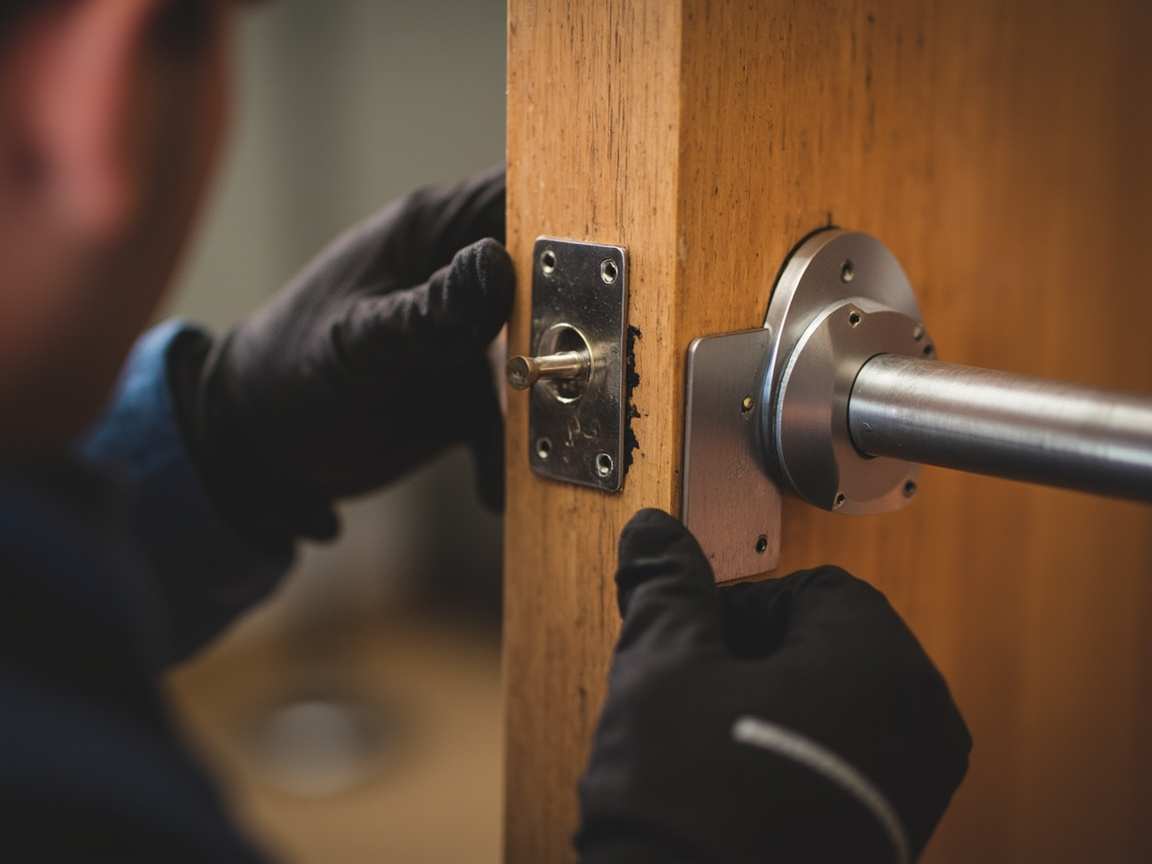
Mortise Lock vs Cylindrical Lock: Key Differences
Installation and Door Prep
Mortise locks require cutting a deep rectangular pocket into the door edge, which generally means more labor, more precision, and in many cases a locksmith or carpenter rather than a DIY job — especially on a door that wasn't pre-mortised. Cylindrical locks just need two round bored holes, which is faster, less invasive, and far more forgiving if you're replacing an existing bored lock with a similar one.
Security and Durability
Mortise lock bodies are generally thicker and more substantial, and the deadbolt throw is typically longer, giving more engagement with the frame. Cylindrical locks can be built to the same security grade, but the knob/lever shank and the thinner cross-bored door section are physically more vulnerable to certain forced-entry techniques if the hardware itself is a lower grade.
Cost
Mortise locks and their installation generally cost more than cylindrical locks, due to the labor-intensive door prep and the more complex hardware. Cylindrical locksets are widely available at multiple price points and are the more budget-friendly option for straightforward replacements. Exact pricing varies by hardware brand, lock grade, and local labor rates, so it's worth getting a quote for your specific door rather than assuming a number.
Appearance and Hardware Options
Mortise trim often has a more traditional or architectural look, with options for separate thumb-turn, keyed cylinder, and lever trim — which is part of why you'll see them on historic and upscale doors. Cylindrical locks come in far more mass-market styles, finishes, and lever/knob designs, since nearly every major residential hardware brand makes them.
Maintenance and Repair
Both types can wear out, but they fail differently. A mortise lock that's binding or sticking usually points to an issue inside the case itself — springs, the latch mechanism, or alignment — while a cylindrical lock that feels loose or sticky is more often a knob/lever spindle or strike plate alignment issue. If your lock already feels off, our guide on lock repair: when is it worth doing yourself and when to call a locksmith walks through how to tell the difference before you start taking hardware apart.

What Are the Disadvantages of a Mortise Lock?
The main disadvantages of a mortise lock are higher installation cost, more invasive door prep, and fewer DIY-friendly replacement options. Because the lock body is custom-fit to a rectangular pocket, repairs and hardware swaps often require matching dimensions precisely, and not every door is built thick enough to accept one without modification.
Beyond installation, mortise locks can also be harder to source replacement parts for if the hardware is older or from a discontinued line, since mortise lock bodies aren't as standardized across brands as cylindrical hardware is. That's less of a problem with modern commercial-grade mortise hardware, but it's a real consideration on older residential doors.
What Are the Disadvantages of a Cylindrical Lock?
The main disadvantages of a cylindrical lock are a generally lower ceiling on physical security compared to top-tier mortise hardware, and more exposure around the knob/lever shank and bored holes to certain forced-entry methods on lower-grade units. The large cross-bore also removes more material from the door itself, which can slightly weaken the door edge over time if the wood or core isn't solid.
Cylindrical locks also offer less design flexibility for separate push/pull functions on the same unit — most cylindrical hardware ties the latch and handle together, where a mortise lock can separate those functions in one case. For a lot of homes and standard commercial interiors, neither of these drawbacks matters much. For high-security exterior applications, it's worth stepping up to a higher lock grade or pairing the lockset with a separate quality deadbolt.
Are Cylinder Locks More Secure?
It depends on what's being compared. A "cylinder lock" can mean a cylindrical (bored) lockset, or it can refer to the pin-tumbler cylinder used inside both mortise and cylindrical hardware. A well-built, high-grade cylindrical lockset with a quality deadbolt can match or exceed a lower-grade mortise lock — security comes down more to the lock's grade and the deadbolt than the lock body style alone.
That said, most mortise locks on the market are built to commercial-grade standards by default, because they're so common in commercial and multifamily settings where code often requires it. If you're comparing an average residential cylindrical lockset to an average commercial mortise lock, the mortise lock will usually win on raw durability — but a Grade 1 cylindrical deadbolt paired with a solid strike plate and long screws closes most of that gap for residential use.
What Locks Do Police Recommend for Doors?
Police departments and security professionals commonly recommend a high ANSI/BHMA security grade deadbolt (Grade 1 or Grade 2), a reinforced strike plate with long screws into the door frame, and solid-core doors — regardless of whether the lockset itself is mortise or cylindrical. The lock style matters less than the grade, the deadbolt throw length, and how solidly the strike plate anchors into the framing.
General recommendations also tend to include keeping exterior doors deadbolted even when a locking knob or lever is present, since a standalone deadbolt resists kicking and prying better than a knob lock alone. If your current exterior door only has a cylindrical knob lock with no separate deadbolt, that's usually the first upgrade worth making before worrying about mortise vs. cylindrical at all.
Mortise Lock vs Cylindrical Lock: Which Is Better for Your Door?
There's no single winner — it comes down to the door and the goal.
- Standard residential exterior doors: Cylindrical lever or knob sets paired with a quality deadbolt cover most homes well, and they're easier to service and replace.
- Historic or architecturally detailed doors: Mortise locks usually fit the existing door prep and aesthetic, and ripping that out for cylindrical hardware can mean extra carpentry work.
- Commercial storefronts and heavy-use doors: Mortise locks are common here because of their durability and ability to integrate separate latch, deadbolt, and trim functions — something our guide to high security locks for businesses covers in more depth for owners weighing hardware upgrades.
- Interior doors (bedrooms, offices, bathrooms): Cylindrical locksets are the practical default — fast to install, inexpensive to replace, and available in privacy, passage, and keyed functions.

Related Lock Comparisons Worth Knowing
A few other terms tend to come up alongside this decision, so it's worth untangling them.
Cylindrical Lock vs Tubular Lock
Tubular locks are technically a subtype of cylindrical (bored) lock — the difference is mostly in the internal latch mechanism and bore pattern. For practical shopping purposes, most residential "cylindrical" locks sold today are tubular-style, so you'll rarely need to distinguish between the two unless you're matching an older lock's exact bore spacing.
Mortise Lock vs Lever Lock
This isn't really an apples-to-apples comparison — "lever lock" describes the handle style, not the lock body. Both mortise and cylindrical locks are available with lever handles instead of knobs. Levers are often chosen for accessibility (they're easier to operate with limited hand mobility) and are frequently required by building codes in commercial spaces.
Mortise Lock vs Deadbolt
A deadbolt is a type of locking bolt, not a lock body style — and a mortise lock can contain a deadbolt function inside its case. The real comparison is usually between a standalone cylindrical deadbolt (the separate round unit above a doorknob) and a mortise lock that integrates latch and deadbolt into one case. Standalone deadbolts are simpler, cheaper, and widely used as a security add-on to an existing knob or lever lock.
Mortise Cylinder vs Rim Lock
A mortise cylinder is the specific keyed cylinder shape designed to thread into a mortise lock case — it's a different size and thread pattern than the cylinders used in cylindrical locksets. A rim lock is a separate surface-mounted lock body attached to the inside face of the door rather than recessed into it; it's common as an auxiliary night-latch style lock on doors that already have a primary mortise or cylindrical lock.
Cylindrical Locks for Storage Units
Storage units typically use a different category of hardware altogether — disc locks, padlocks, or specialized cam locks rather than residential-style cylindrical locksets — because the application calls for weather resistance and a shrouded shackle rather than a knob or lever. If you're trying to upgrade or get back into a jammed storage unit lock, that's a different project than choosing between mortise and cylindrical door hardware.
Quick Decision Checklist
Use this as a gut-check before you buy hardware:
- Does your door already have a mortise pocket cut, or bored round holes? Match your replacement to the existing prep unless you're ready for carpentry work.
- Is this an exterior entry door? Prioritize lock grade and a separate deadbolt over lock body style.
- Is this a commercial or high-traffic door? Lean toward mortise hardware for durability and function flexibility.
- Is this a standard interior or budget-conscious residential door? Cylindrical lever or knob sets are usually the practical choice.
- Are you trying to match existing hardware finish and function across multiple doors? Check what's already installed before mixing lock body types.
Keeping Either Lock Working Right
Whichever style you land on, the lock is only as good as its upkeep. Grit in the latch, loose strike plates, and dried-out internals cause more lock failures than any flaw in the lock body design itself. Our lock maintenance tips to preserve your locks page covers the basics that apply to mortise and cylindrical hardware alike.
Still Not Sure Which Lock Fits Your Door?
Mortise and cylindrical locks solve the same basic problem in different ways, and the right call usually comes down to your door's existing prep, how the space is used, and how much security the application calls for. If you're staring at a door and not sure what's already installed or what will actually fit, that's a quick thing to sort out before buying hardware you can't return.
Crown Locksmith works on residential, automotive, and commercial lock hardware throughout Atlanta, Brookhaven, Chamblee, Tucker, Norcross, Dunwoody, Smyrna, Decatur, Stone Mountain, Stockbridge, and Jonesboro. If you'd like a second opinion on mortise vs. cylindrical hardware for a specific door — or just want it installed correctly the first time — reach out and we'll help you figure out what actually fits.