
Locked Out of Your Apartment With No Spare Key? Here's What to Do Next
Standing outside your own front door, patting down pockets that don't have your keys in them, is one of those moments that feels worse than it should. If you're locked out of your apartment with no spare key anywhere to be found, the good news is you have more options than you think — and most of them don't involve breaking a window.
This guide walks through exactly what to do, in order, plus what it actually costs to deal with a lost or missing apartment key, what your rights are as a tenant, and how to make sure this doesn't happen again.
What to Do If You're Locked Out of Your Apartment With No Spare Key
Start by checking every other entry point, then call anyone who might have a copy of your key — a roommate, family member, or your landlord's office. If no one can help immediately, contact your property manager or on-call maintenance line, and if that fails, call a licensed locksmith who can open the door without damaging the lock.
Here's that same process broken down into steps you can actually follow while standing in the hallway:
- Check every other door and window. Patio doors, back entrances, and ground-floor windows are sometimes left unlocked, especially if you have a roommate who left in a hurry.
- Call or text anyone with a key. A roommate, partner, family member, or close friend who's holding a spare copy can save you a call-out fee entirely.
- Contact your leasing office or property manager. Most apartment communities keep master keys or can dispatch maintenance staff to let you in, particularly during business hours.
- Check for an after-hours emergency line. Larger complexes typically list an emergency maintenance number on the leasing office door, your lease paperwork, or the resident portal.
- Call a licensed locksmith. If building staff isn't available or your complex doesn't offer lockout assistance, a locksmith near you can open the door without forcing it or damaging the frame.
Locked Out of Your Apartment After Hours
Nighttime and weekend lockouts are more common than you'd expect, simply because that's when people are coming and going most. If your leasing office is closed, check your lease or the resident portal for an emergency maintenance contact — many properties keep this separate from the regular office line specifically for after-hours issues. If there's no emergency line, or no one answers, a 24-hour locksmith is your most reliable next step.

Rule Out the Easy (Free) Fixes First
Before you spend money on a locksmith, it's worth ruling out anything that costs nothing. Walk the perimeter of your unit if you can safely access it — a patio door, a window left cracked for airflow, or a back entrance are all worth checking. If you live in a house rather than an apartment and are wondering how to get back in free, the same logic applies: check unlocked windows, garage doors, or a doggy door before resorting to force.
A word of caution on DIY methods you may have seen online, like slipping a credit card against a spring latch or "popping a lock" with a shim: these techniques work on certain older knob locks under narrow conditions, and they frequently fail or damage the lock and door frame in the process. Deadbolts, smart locks, and most modern apartment hardware aren't vulnerable to these tricks at all. If the easy checks don't pan out, it's time to call for help rather than risk breaking something that costs more to fix than a locksmith visit would have.
What to Expect When the Locksmith Arrives
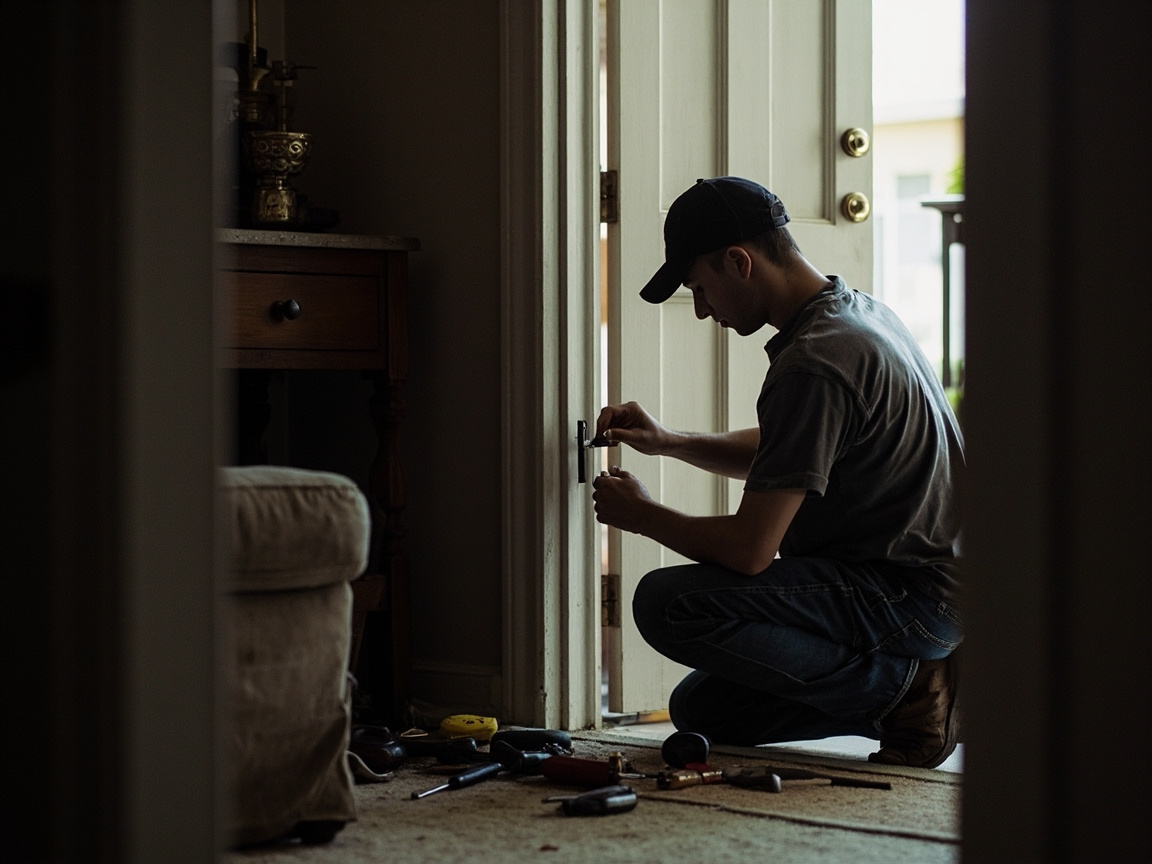
When a locksmith shows up for an apartment lockout, expect to be asked for proof you live there — a driver's license with a matching address, a copy of your lease, or a utility bill works in most cases. This isn't the locksmith being difficult; it's a standard step that protects you and the property from someone breaking into the wrong door.
From there, a trained locksmith typically assesses the lock type and uses non-destructive entry methods first, meaning picking or manipulating the lock rather than drilling it out. Drilling is usually a last resort, used only when the lock is damaged, jammed, or otherwise can't be opened without force. Once you're back inside, the locksmith can also rekey the lock or cut a replacement key on the spot if you'd like extra peace of mind, especially if you're unsure where your original keys ended up.
For a closer look at how professionals handle these calls from start to finish, our guide on emergency locksmith services and what to expect during a lockout situation covers the full process in more detail.
How Much Is a Replacement Key for an Apartment?
The cost of a replacement apartment key depends on three things: whether your property manages it in-house, what kind of lock you have, and whether you need a locksmith to cut the key or just a duplicate made at a hardware counter. Standard keys for traditional locks are generally inexpensive to duplicate, while electronic fobs, key cards, or smart lock credentials usually cost more and often have to go through your leasing office.
A few factors that affect the price:
- Lock type. A basic pin-and-tumbler lock is far cheaper to key-copy than a high-security or smart lock system.
- Who handles it. Many apartment communities charge a flat replacement fee if you go through the office, while a locksmith visit for cutting a key on the spot is priced separately.
- Whether a rekey is involved. If you want the lock changed entirely (not just a new key made), that's a different, somewhat higher cost than a simple duplicate.
- Time of day. Emergency or after-hours locksmith calls typically cost more than a scheduled daytime visit.
Because pricing varies so much by property management company, lock brand, and region, it's worth asking your leasing office directly what their replacement key fee is — it's usually spelled out in your lease or move-in paperwork.
What Happens If You Lose Your Apartment Key?
If you lose your apartment key, notify your leasing office or landlord as soon as possible — don't wait until you're locked out to mention it. Depending on your lease terms, your property may charge a replacement fee, require a full rekey of the lock, or both, especially if the lost key could compromise building security.
Reporting a lost key promptly matters for a couple of reasons. First, if the key is later found by someone else, your property manager needs to know it's been lost so they can decide whether to rekey the unit as a precaution. Second, many leases specify a required process for lost keys, and skipping that step could affect your deposit or violate your lease terms. When in doubt, check your lease agreement for language about lost keys, replacement fees, and rekeying policies — it's usually in the section covering keys, locks, and security deposits.
Your Tenant Rights: Can You Get Reimbursed for a Lockout?
Whether you can get reimbursed for a lockout locksmith call depends entirely on your lease, your landlord's policies, and local tenant law. There's no universal rule — some leases explicitly state the tenant covers all lockout costs, while others require the landlord to provide after-hours access as part of habitability obligations.
When Your Landlord May Be Responsible
A landlord may be responsible for lockout costs if the lock itself was faulty or broken through no fault of yours, if your lease specifically promises 24-hour maintenance access, or if local tenant protection laws in your area require it. This varies significantly by city and state, so it's worth reviewing your lease and, if you're unsure, checking with a local tenant rights organization or legal aid office rather than assuming either way.
If you believe you were charged unfairly or that your landlord failed to provide access they were contractually obligated to offer, document the situation — the date, time, who you contacted, and what response (or lack of one) you got. That record matters if you decide to dispute a charge or raise the issue with your property manager later.
How to Prevent Future Lockouts
The best lockout is the one that never happens. A few low-effort habits go a long way, and most of them cost nothing beyond a little planning.
| Prevention Step | Why It Helps |
|---|---|
| Leave a spare key with a trusted neighbor or nearby friend | Gives you a free, fast backup instead of calling a locksmith |
| Store a spare in a lockbox (not under the mat) | Keeps a backup accessible only to you, even if you lose your main set |
| Save your leasing office's after-hours number in your phone | Removes the scramble to find it while standing outside |
| Attach a tracker tag to your keychain | Makes a quick location check possible before you panic |
| Ask about a smart lock or keypad entry | Removes the "physical key" problem entirely, if your lease allows it |
| Keep a photo of your lease and ID on your phone | Speeds up verification if a locksmith or staff member needs proof of residency |
If a smart lock is an option for your unit, it's worth asking your property manager about installation policies — many allow keypad or app-based locks with landlord approval, which sidesteps the spare-key problem for good.
When to Call a Locksmith for an Apartment Lockout
If you've checked every door and window, tried everyone who might have a spare key, and your leasing office can't help right away, it's time to call a licensed locksmith. This is especially true late at night, when building staff may be unreachable, or if you suspect your lock is damaged rather than simply locked.
Crown Locksmith provides residential locksmith services across Atlanta, Brookhaven, Chamblee, Tucker, Norcross, Dunwoody, Smyrna, Decatur, Stone Mountain, Stockbridge, and Jonesboro, including apartment lockouts, lost key replacement, and lock rekeying. If you're also dealing with a vehicle lockout on top of everything else, our guide on what to do if you're locked out of your car covers that process step by step. And if you want a deeper look at the home side of things, our overview of residential locksmith services breaks down everything from rekeys to lock upgrades.
The Bottom Line
Getting locked out of your apartment with no spare key is frustrating, but it's rarely a dead end. Check the easy stuff first, lean on your leasing office or building staff, and call a licensed locksmith when those options run out. A little prevention — a spare key with a neighbor, a saved after-hours number, or a smart lock — means the next time this happens, it's a minor inconvenience instead of a stressful standoff with your own front door.
If you're locked out right now and need help getting back inside safely, reach out to Crown Locksmith for emergency lockout assistance across the Atlanta area.